Indigenous-led record label

Music
rooted.
Futures
built.

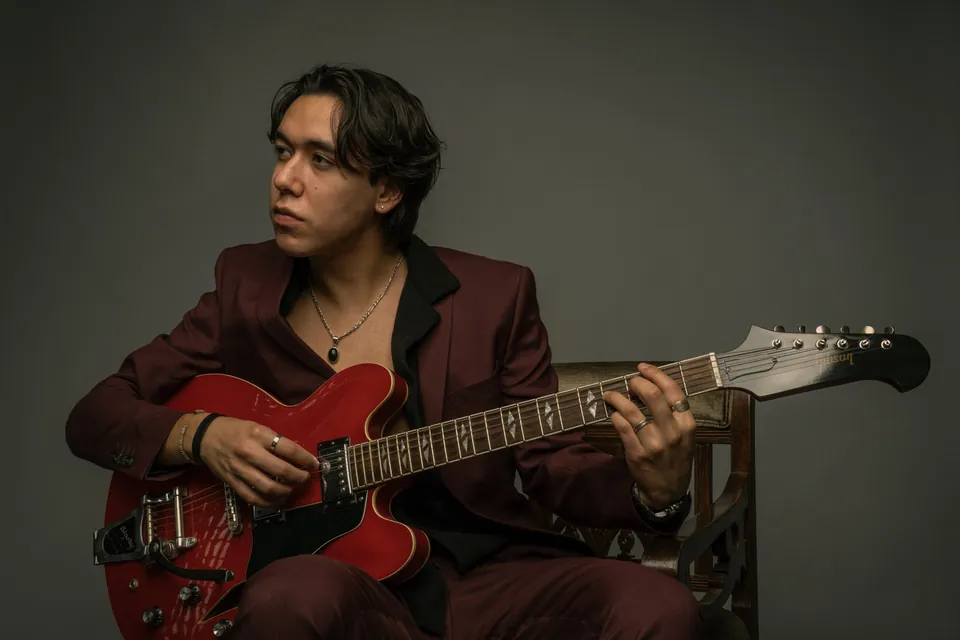
Zeegwon Shilling's hands on his red Gibson guitar, in a burgundy suit
Zeegwon Shilling

An Indigenous-led record label building careers, not just catalogues — where established voices and emerging talent grow side by side.

The label

A home for artists with something to say.

Littlebit Records is an Indigenous-led record label focused on building meaningful, long-term careers for artists whose music, stories and perspectives deserve space to grow.

We believe a record label should be more than a catalogue. It should be a place where artists can develop, experiment and build a future on their own terms.

  • Indigenous owned and led
  • Founded by JUNO Award–winning Cree Métis artist iskwē
  • Distributed worldwide with The Orchard

Our artists

Artists

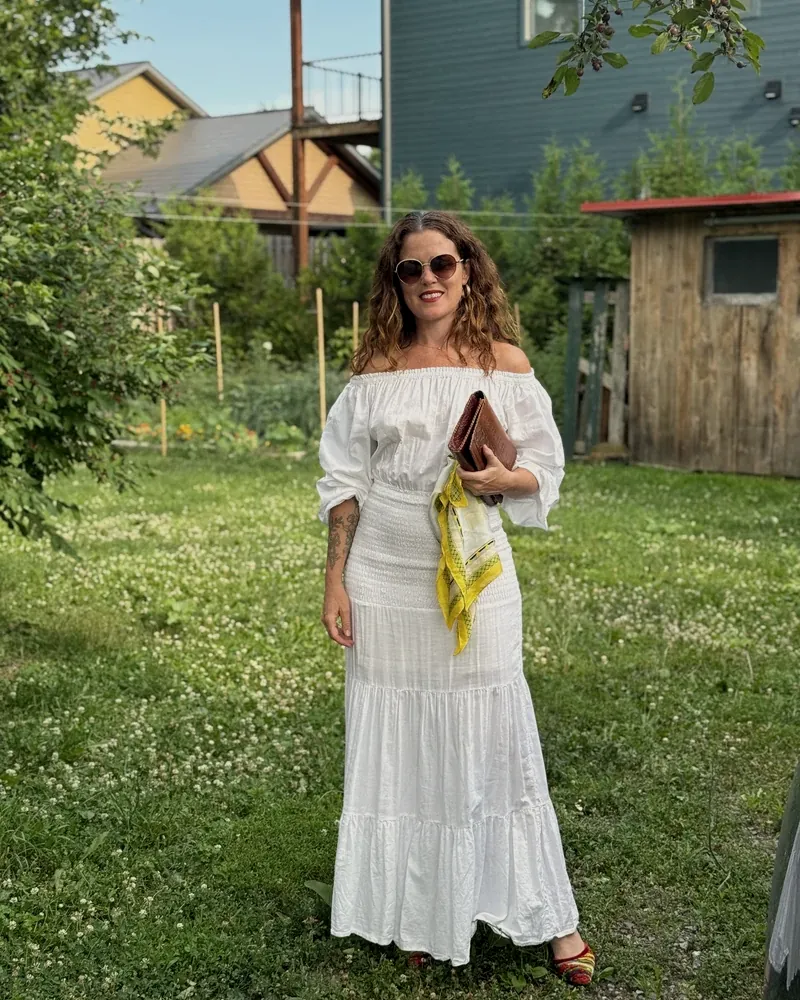
iskwē standing in a summer garden in a white dress

iskwē ᐃᐢᑫᐧᐤ

Littlebit Records is proud to represent and develop the work of iskwē.

JUNO Award–winning Cree Métis artist. Her albums acākosīk, The Stars, and nīna move between electronic, orchestral, and R&B textures while staying rooted in story.

New music is on the way this fall, her first in two years.

Explore iskwē (opens in a new tab)
Zeegwon Shilling seated with an acoustic guitar

Zeegwon

An artist growing with Littlebit Records.

Zeegwon Shilling is an Anishinaabe singer-songwriter and multi-instrumentalist from Toronto and Wasauksing First Nation, and a great nephew of the painter Arthur Shilling. His name means spring, renewal, the start of a new cycle.

Explore Zeegwon

More than a catalogue.

Littlebit Records exists to build careers, not simply release records.

  1. Rooted

    Music connected to identity, culture and lived experience.

  2. Developed

    Artists are given room to evolve, experiment and grow.

  3. Built

    Long-term careers matter more than short-term releases.

In practice

One album at a time
No artist at Littlebit is locked into a long-term contract. Every agreement covers a single project, so the relationship continues because it works, not because a document says it must.
Open books
Our artists see where every dollar comes from and where it goes. Streaming, sync, merch, grants, all of it. An artist who understands their own numbers cannot be taken advantage of.
The whole craft
Vocal coaching, songwriting, production, photography, and the parts artists are rarely taught: budgets, royalties, rights, and how a release actually gets made.
Relationship first
We work in the spirit of Indigenous protocols: relationships that are ongoing and reciprocal, decisions made with artists rather than for them, and music treated as living knowledge.

“If an artist outgrows us, we did our job.”

iskwē, founder
Zeegwon Shilling on a Toronto rooftop, the city skyline behind him

Music rooted in where we come from. Built for where we’re going.

Zeegwon Shilling, Toronto

Music

nīna

iskwē Album, 2024

Also by iskwē: acākosīk and The Stars.

Latest from Littlebit

  1. Latest

    Littlebit Records launches its official site

    A new home for our artists, stories, and community.

    Read more
  2. Fall 2026

    New music from iskwē

    Her first new music in two years is on the way this fall.

  3. August 2026

    Zeegwon Shilling at UpFRONT Festival

    A one-hour set of his own songs at Berczy Park, Toronto, as part of TO Live’s UpFRONT Festival.

    More on Zeegwon
    Zeegwon Shilling playing his red Gibson guitar
  4. August 2026Field notes

    Why I am building this label in the open

    The industry works because artists cannot see inside it. This page is the opposite of that.

    Read moreClose

    I have spent twenty years watching this industry work, and the honest summary is that it runs on a simple imbalance: the people who make the music usually know the least about what happens to it after they press record. Contracts arrive written in a language you were never taught. Statements arrive months late, if they arrive at all. And when you ask questions, you are made to feel that asking is unprofessional.

    Littlebit is my answer to that, and this section of the site is part of the answer. As we build this label, I am going to show the work: what a one-album agreement actually says, what development actually costs, what a release actually earns. Some of it will be exciting. A lot of it will be unglamorous. All of it is the stuff that gets kept behind closed doors, and I no longer see a good reason for the doors.

    If you have ever wondered how this business actually works, stay close. That is what these notes are for.

  5. August 2026Field notes

    Where the money goes when you press play

    A stream pays fractions of a cent. Here is the path that fraction travels, shown in the open.

    Read moreClose

    When you stream a song, the platform pays out a fraction of a cent. Before any of it reaches an artist, that fraction makes a journey: from the streaming service to a distributor, from the distributor to the label, and only then, according to whatever the contract says, to the person who made the song. There is a second, entirely separate path for the songwriting itself, which travels through publishers and collection societies on its own schedule.

    Look at the order of that journey. Everyone along the path takes their share: the platform, the distributor, the label, the publisher. The artist, whose work created every dollar moving through it, is paid last, and usually least. That order is treated as natural law in this industry. It is not law. It is a choice.

    Most artists have never seen this map drawn out, because it is so rarely laid out in the open. At Littlebit, walking through it together is part of development, and our artists see their own numbers at every step. My mission is plain: I want artists to make money from their own work. Everyone else already does.

Rooted in culture. Open to what comes next.

“Talent was never the thing in short supply. Access was.”

iskwē, from the founder’s letter

Land acknowledgement

Littlebit Records works across Turtle Island, and we are grateful to the many Nations, communities, and ancestors whose relationships to these lands, waters, and stories continue to shape the places where we live and work.

We recognize that music, like these lands, carries memory, knowledge, and responsibility. We are committed to building relationships with care, respect, and reciprocity, and to creating space for Indigenous artists, stories, and ways of knowing to move freely and be heard.

Read the founder’s letterClose the letter

My English name is Meghan Meisters. I am professionally known as iskwē, and my ancestors know me as waseskwan iskwew, Blue Sky Woman. I am Cree Métis, a citizen of the Manitoba Métis Federation through my maternal line, and I was largely raised in my grandfather’s home in Winnipeg, in the heart of the Red River Métis Nation, surrounded by story, ceremony, and kinship.

I left Winnipeg in 2004 to chase music. One of my first jobs in Toronto was running a youth music program at the Native Canadian Centre, where I coordinated powwow singing and drumming workshops, hip hop dance, and music production for Indigenous kids, many of whom had not had access to any music education yet, traditional or contemporary. I did not know it at the time, but that job was the blueprint for everything I have built since. Talent was never the thing in short supply. Access was.

Twenty years as an independent artist taught me just how true that was. I built a career inside an industry that often seems to work best when artists do not know how it works. I learned where the money goes because I had to. I learned contracts, budgets, royalties, distribution, and grant systems the way you learn anything when no one will teach you: slowly, and at my own expense. I’ve been blessed to be nominated for and even win some awards along the way, a JUNO among them, for which I am very proud. But sometimes it seems the knowledge cost more than the trophies were worth. Still, I keep meeting brilliant artists paying the same tuition I did.

In 2013, I started my own label because I needed one. It began as a sole proprietorship with a roster of exactly one: me. Since then, it has grown into a federally incorporated company and a team of more than twenty people who have helped carry my music farther than I could have imagined from my family’s living room.

Littlebit Records is that machine, turned outward.

Here is what I believe. An artist should never have to choose between their art and understanding their business. So at Littlebit, development means both. We sign one album at a time, so no one is ever trapped. Our books are open to our artists, always. And by the end of a project cycle, my goal is that every Littlebit artist can read their own statements, run their own budget, and negotiate their next deal from a position of strength, whether that deal is with us or with someone else.

If an artist outgrows us, we did our job.

I do not want Littlebit to be the exception. I want it to be proof that the industry’s way was always a choice, and that a different choice was available the whole time.

This page, and this label, will be built in the open. I will share the process as it happens, the wins and the unglamorous parts too, because you should get to see how a record label actually works. That has been kept behind closed doors for long enough.

Come with me.

iskwēᐃᐢᑫᐧᐤ Founder, Littlebit Records

The people behind Littlebit

iskwē ᐃᐢᑫᐧᐤ

Founder
Artistic Direction

JUNO Award–winning Cree Métis artist, twenty years independent, and board president of an Indigenous-led orchestra.

Mariano Ureña

Co-founder
Digital & Business Strategy

Legal mind, systems builder — a decade designing operational infrastructure for law, now in full service of the art.

Let’s build what’s next.

For artists, collaborators, media and industry inquiries.

Contact